Your bot handles text. We handle voice. Install the skill, verify your number, and call your Clawdbot like a phone call. It hears you speak, reads the transcript, and replies. You change nothing.
Why Voice?
Drag the slider.
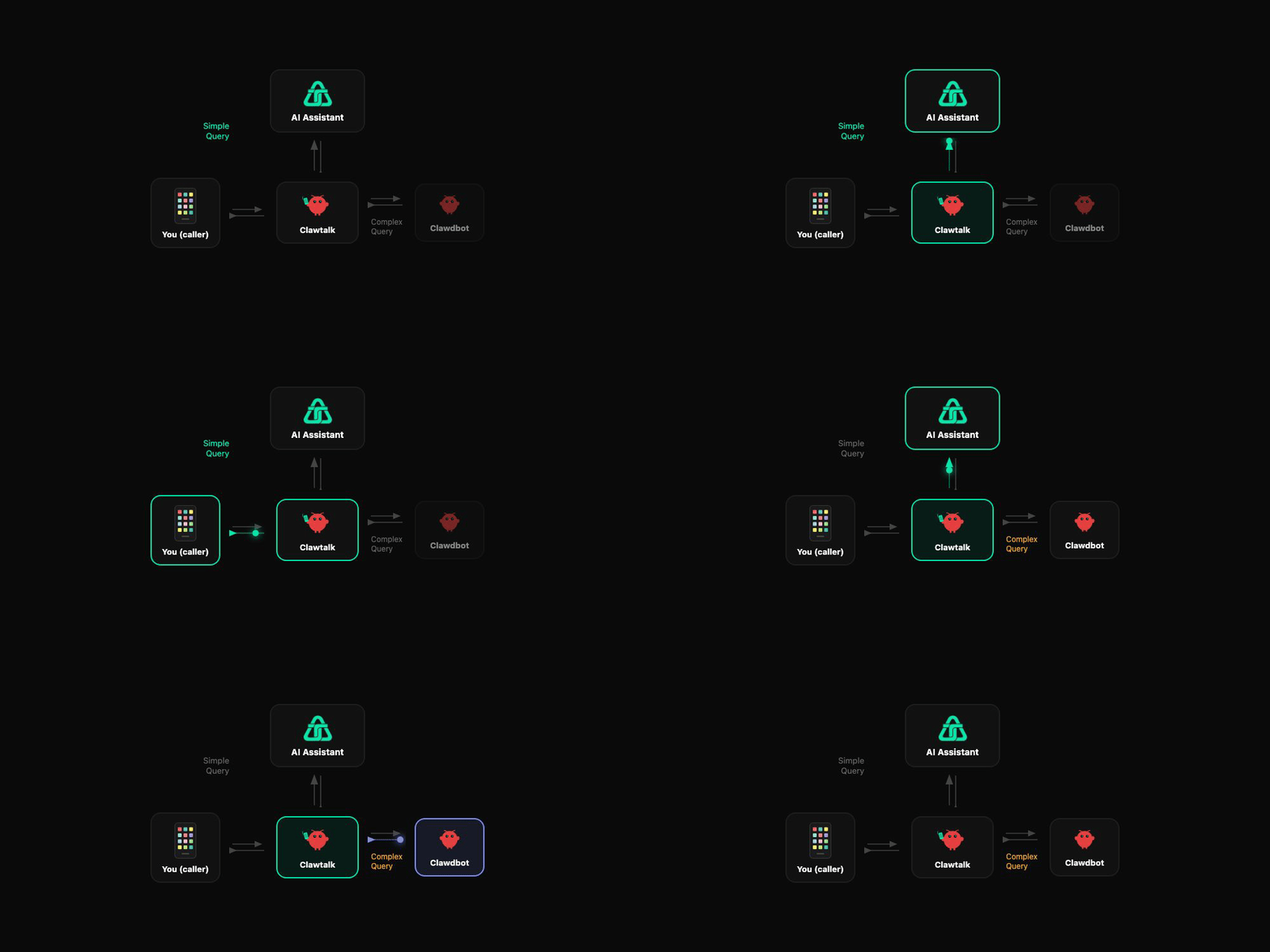
Three boxes. That's the whole architecture.
{
"event": "message",
"call_id": "clk_7xK9mP",
"text": "Hey, can you check my calendar for tomorrow?",
"timestamp": "2025-02-01T19:58:00Z",
"sequence": 1,
"is_interruption": false
}
{
"type": "response",
"call_id": "clk_7xK9mP",
"text": "You have 3 meetings tomorrow."
}
That's it. Your bot never hears audio, never manages a call, never configures a SIP trunk. Just JSON.
No PhD in telephony required.
Call your bot from your phone. Or tell your bot "call me" and it does. Both directions work out of the box.
POST /v1/calls { "to": "+15550123" }
Set a PIN. Anyone calling without it gets rejected. Your bot. Your access control. Optional but recommended for shared numbers.
pin: "8472" | attempts: 3 | bcrypt hashed
Free tier only accepts calls from your verified number. Want your bot to answer calls from anyone? Upgrade. Want it to call any number? Upgrade.
verified: true | allowlist: ["+15550123"]
Persistent WebSocket connection streams transcripts in real-time. Your bot responds instantly. No polling, no webhooks, no latency.
./scripts/connect.sh start
Private fiber network. Direct carrier connections. Not resold VoIP. When your bot talks, there's no lag.
latency: <100ms | uptime: 99.999%
Your bot never sees a Telnyx API key. Everything routes through ClawdTalk. Nothing to leak, nothing to rotate.
auth: "managed" | keys_exposed: false
Use Cases
Because it already acts like one.
One number to call. One short code to text. We know it's you.
Call the number. We match your caller ID to your registered Clawdbot and connect you instantly. No menus, no codes, no waiting. Just your voice and your bot.
Want extra security? Enable an optional PIN during setup. Otherwise, caller ID is all we need. Upgrade to get your own dedicated number.
Run ClawdTalk on your own infrastructure for maximum control and privacy.
Get the complete source code, documentation, and contribute to the project.
View on GitHub
# Clone the repository
git clone https://github.com/team-telnyx/clawd-talk.git
# Enter the directory
cd clawd-talk
# Copy environment template
cp .env.example .env
# Start with Docker Compose
docker compose up -d
Requirements: Docker, Docker Compose, Telnyx account with SIP credentials
One-click installation and management through the ClawdHub ecosystem.
Deploy ClawdTalk skills directly from ClawdHub with automatic updates and configuration management.
Free means free. No credit card. No "trial expires in 14 days."
A real call between a developer and their Clawdbot. Voices by Telnyx NaturalHD.
Register your email and phone to get your ClawdTalk voice line.
Sign in with a magic link sent to your email.
FAQ
The stuff you're probably wondering.
Twilio gives you telephony primitives. You still need to spin up a WebSocket server, pipe raw audio to a speech-to-text service, route text to your bot, send the response to a text-to-speech service, and stream audio back. That's 3-4 services and a publicly deployed server just to say "hello." ClawdTalk skips all of that. Your bot receives text, returns text. We handle the number, the audio, the transcription, and the synthesis.
No. If your bot can receive a webhook and return text, it works with ClawdTalk. Zero code changes. Your existing skills, plugins, and workflows all carry over.
Telnyx's global network keeps voice latency low. Speech-to-text and text-to-speech add some processing time, but the architecture streams rather than waits.
Your bot runs on your hardware. ClawdTalk only sees the text during a call. No training on your data. No logs stored beyond what you configure.
Yes. Trigger a call via the API and your bot can proactively call any number. Reminders, alerts, check-ins.
Free means free. No credit card. No trial that expires in 14 days. You get a real phone number and real minutes. When you need more, you pay per minute.
Any bot that speaks HTTP. Clawdbot, OpenClaw, LangChain agents, custom scripts. If it can receive a POST and return text, ClawdTalk can give it a voice.